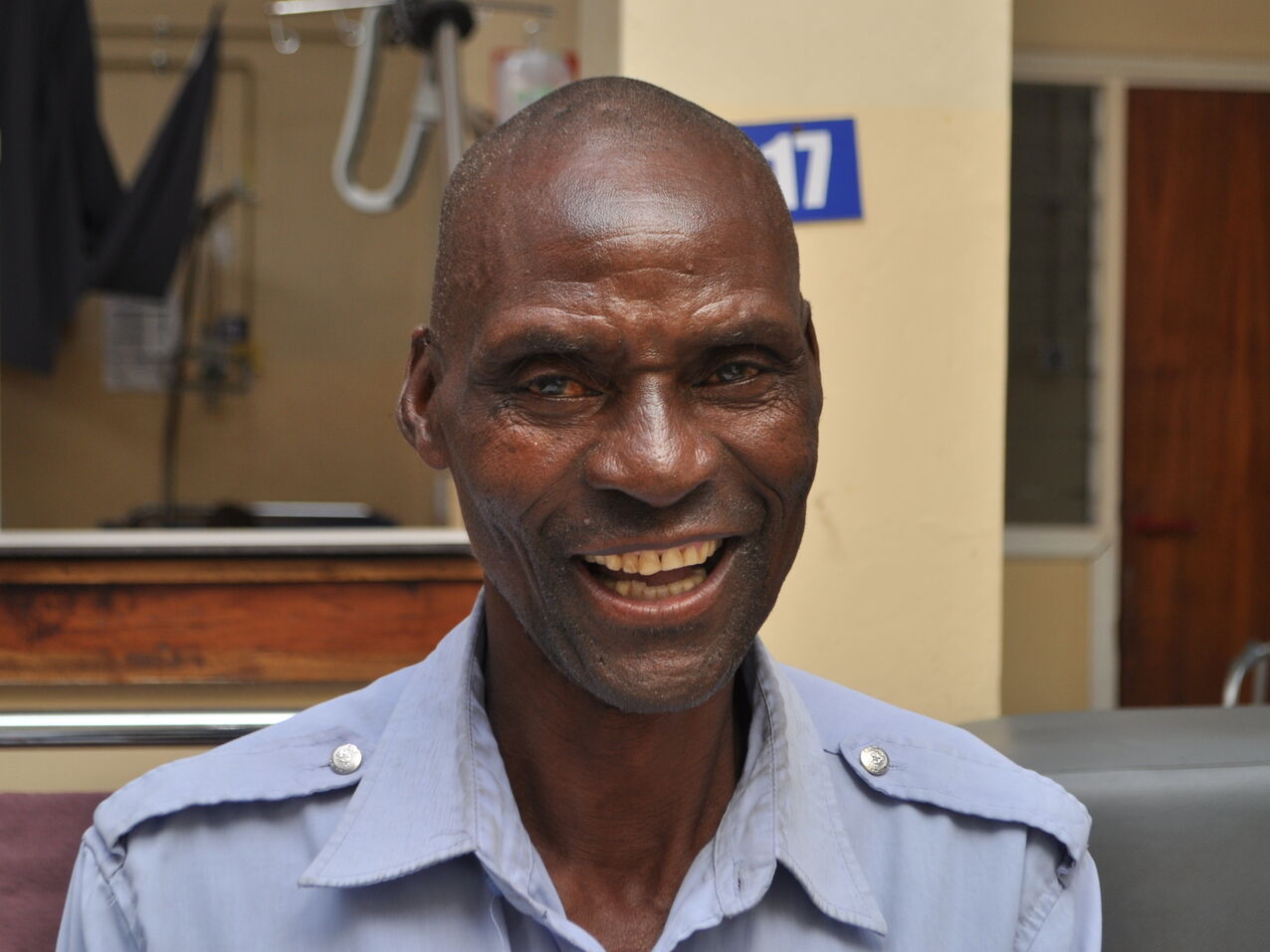
65-year-old Masitala is has spent most of his life working the land in Dedza District in Malawi. A husband and father of seven children, six of whom now have families of their own, he has always relied on farming maize and soya beans to provide for his household.
Eight months ago, the simple life he values began to change. Masitala started experiencing difficulty passing urine. As the condition worsened, he found himself making repeated visits to health facilities, where he received medication and catheterisation to manage the symptoms. While these measures brought temporary relief, they did not solve the underlying problem. Month after month, he continued living with discomfort, uncertainty, and the inconvenience of relying on a catheter. The condition made it harder for him to focus on farming and the daily responsibilities that help sustain his family. After several hospital visits, clinicians advised him to seek treatment at our medical partner’s care center, Nkhoma Hospital, where he could access surgical care.
Determined to find a lasting solution, Masitala made the journey despite having very little money. Unable to afford transportation, he walked for nearly three hours to reach the hospital. At Nkhoma Hospital, doctors diagnosed him with Benign Prostatic Hyperplasia (BPH) and advised that he requires an open prostatectomy to restore normal urinary function and improve his quality of life. For Masitala, the diagnosis brought hope but also worry. The surgery he needs is beyond what he can afford. Like many small-scale farmers, his income depends on the harvest, and the resources available to him are barely enough to meet his family’s basic needs.
Our medical partner, African Mission Healthcare, is requesting $530 to fund the procedure for Masitala. The treatment is scheduled to take place at Nkhoma Hospital on June 3rd and, once completed, it will hopefully improve his quality of life. Masitala hopes that surgery will free him from months of discomfort and allow him to return to the fields, care for his family, and enjoy life without the burden of illness.
He says, “I have endured this condition for many months because I had no other choice. I walked all the way to the hospital because I believed there would be help for me here. My wish is to get treated, and return to my family healthy and able to work again.”