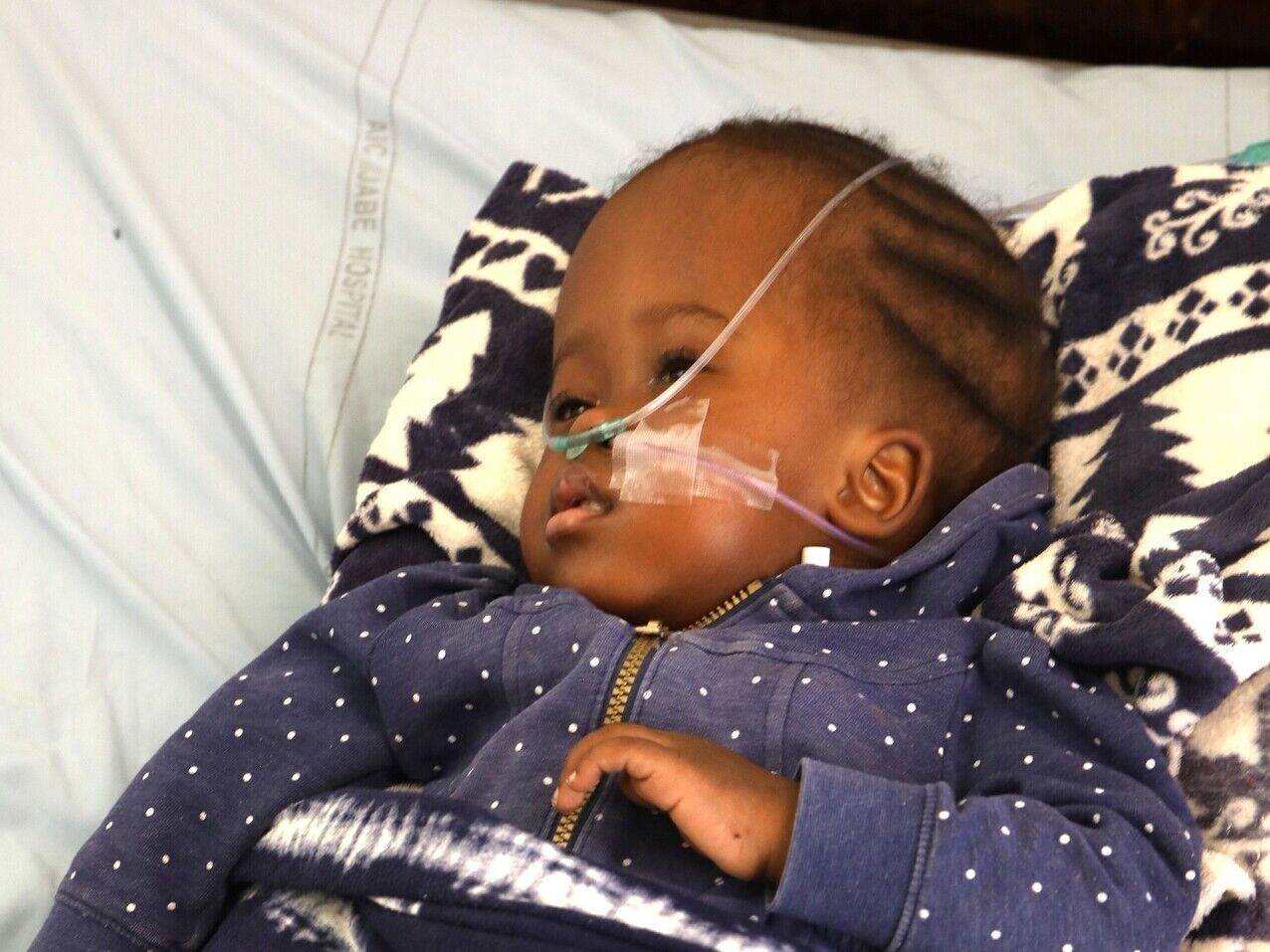
Margaret is a two-year-old baby girl from Kenya. When Margaret’s mother was pregnant with her, a scan done just a week before the delivery date revealed devastating news. Her unborn baby had both hydrocephalus, a condition in which excess cerebrospinal fluid accumulates in the brain and increases intracranial pressure; and spina bifida, a neural tube defect where the spinal column fails to close completely during early embryonic development.
The weight of this diagnosis led to the untimely labour and an emergency caesarean section. Soon after birth, doctors noticed that Margaret had difficulty in breathing and she was immediately put on a ventilator. Seeing her baby, barely hours old, hooked to machines broke Margaret’s heart. Thoughts of the future that awaited them terrified Margaret’s parents, leaving them with so many questions lingering in their minds.
At three weeks old, Margaret underwent her first shunt insertion surgery to treat hydrocephalus. The procedure was a success, and a few days later they were discharged. The journey back home was filled with worry, as Margaret’s parents questioned their ability to raise their daughter, who now required special attention and frequent hospital visits. Looking at their financial ability, they couldn’t help but wonder whether they had the capacity to care for their baby. Even then, they decided to stand by her, offering whatever little they had to ensure her life and health were well cared for.
Two weeks after being discharged from the hospital, Margaret started crying more and having trouble sleeping. Her worried parents took her back to hospital where doctors found that her shunt was blocked, and needed revision surgery. Unfortunately, Margaret had also developed meningitis. She was immediately started on medication to clear the infection, and later underwent the shunt revision surgery, followed by another spina bifida surgery.
Weeks later, Margaret’s mother noticed that her daughter’s head was enlargening faster than the rest of her body. She brought Margaret back to hospital where the shunt was found to have malfunctioned, and another shunt revision surgery was performed. Within days, Margaret was discharged, but since then, her life has been a series of hospital visits and hospitalisations due to various medical conditions. “I have spent more time in hospital with my daughter than at home,” Margaret’s mother says as she recounts the many hospital stays they’ve had to endure due to Margaret’s condition. The experience has crippled them financially, and they are presently in debt trying to fend for their daughter and family at large.
Four months later, a mobile clinic team from BethanyKids Kijabe Hospital (BKKH) noticed that Margaret’s head had significantly increased from the last clinic, and advised for her to be brought to hospital. The family did not have transportation money, and it took another two months for Margaret’s dad to raise transport money and bring her to the hospital. After a series of tests, another shunt revision surgery was recommended. Without treatment, Margaret will experience severe physical and developmental delays.
Our medical partner, African Mission Healthcare, is requesting $574 to cover the cost of surgery for Margaret. The procedure is scheduled to take place on August 12th and will drain the excess fluid from Margaret’s brain. This will reduce intracranial pressure and greatly improve her quality of life. With proper treatment, Margaret will continue developing into a strong, healthy young girl.
Her mother says: “My daughter is in so much pain. She hardly eats or sleeps well. Seeing her in that state breaks my heart as her mother, and makes me ask a lot of questions that still go unanswered.”