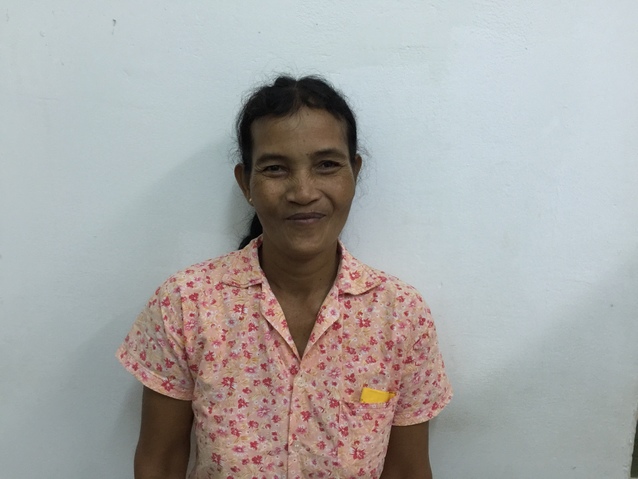
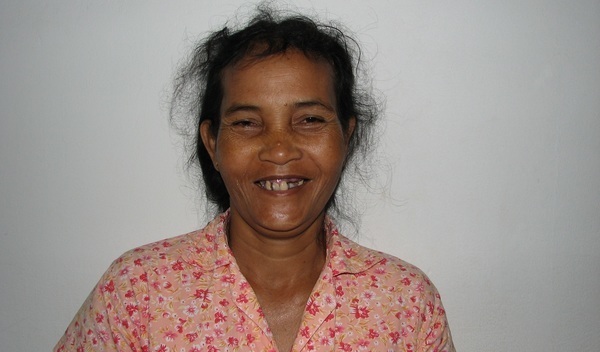
Doeun, a rice and crop farmer, enjoys watching Chinese dramas on TV. Married with six children and one grandchild, the 47-year-old woman lives with her family in Cambodia.
“Noeun developed a cataract in each eye 10 years ago,” says our Cambodian medical partner, Children’s Surgical Centre (CSC). Cataracts occur when a cloudy layer develops over the eye lens, affecting overall vision.
Noeun’s condition causes her to experience blurred vision, pain, and irritation. “I can’t see everything clearly, do work well, or go anywhere outside,” Doeun explains.
While cataract surgery itself is simple and widely practiced, inadequate infrastructure and financial barriers can prevent patients in developing countries from seeking treatment. In these cases, diminished vision due to untreated cataracts can detract from a patient’s overall independence, limiting the individual from being able to work and support themselves financially.
$225 will fund treatment for both of Noeun’s cataracts. Doctors will make a small incision in each eye to remove and replace the affected lens with an artificial substitute.
CSC explains that after this operation, Doeun will regain vision in both of her eyes.
“I hope my [eyes] can see everything [clearly] again so I can continue my work at [the] farm field and do some housework like cooking food,” Doeun shares. “I can [easily go] anywhere outside too.”